

In today’s digital landscape, teams face mounting pressure to produce high-quality outcomes at a rapid pace. As organizations become more distributed and projects grow in complexity, traditional collaboration methods often fall short—resulting in miscommunication, duplicated effort, and wasted time. Boosting Team Collaboration with Generative AI offers a compelling solution by leveraging intelligent algorithms to streamline workflows, spark creativity, and automate repetitive tasks. This approach empowers teams to focus on strategic activities while AI handles routine work like summarizing meeting notes or drafting initial content drafts.
Currently, generative AI tools can be embedded into existing collaboration platforms, enabling real-time co-creation and data-driven decision making. In this article, we will guide you through integrating generative AI into your team’s toolkit this year (2026). You’ll gain insights into the evolution of collaboration practices, the fundamentals of generative AI, key benefits for teams, top tools to consider, and best strategies for seamless adoption. Whether you lead a project, manage a department, or contribute as an individual, this guide will equip you with actionable steps to transform collaboration dynamics and achieve measurable productivity gains. By the end of this deep dive, you will have a clear roadmap to unlock the full potential of Boosting Team Collaboration with Generative AI and drive impactful results within your organization.
The Evolution of Team Collaboration in Today’s Workplace
Collaboration has undergone a profound transformation over the past decade. Early digital tools introduced file sharing and basic messaging, but often led to version control challenges and information silos. As cloud platforms emerged, teams gained access to real-time co-authoring, integrated chat, and video conferencing features. Yet manual tasks such as note-taking, data consolidation, and content drafting continued to slow down progress.
Today, generative AI bridges these gaps by operating as an intelligent assistant. Instead of flipping between documents, inboxes, and spreadsheets, team members can interact with AI agents that summarize discussions, propose action items, and generate draft content on demand. This pull-based model reduces context switching and accelerates decision cycles. For instance, AI-powered meeting tools can deliver concise bullet-point summaries immediately after a call, complete with assigned tasks and deadlines. Similarly, content teams can receive multiple draft versions from a single prompt, allowing writers and designers to iterate rather than start from scratch.
This shift toward AI-enhanced collaboration aligns with research from the National Institute of Standards and Technology (https://www.nist.gov), which emphasizes the importance of interoperability and human-in-the-loop workflows. By adopting generative AI solutions today, organizations can achieve faster innovation cycles, higher employee satisfaction, and improved cross-functional alignment—critical advantages in competitive markets.
Understanding Generative AI Fundamentals
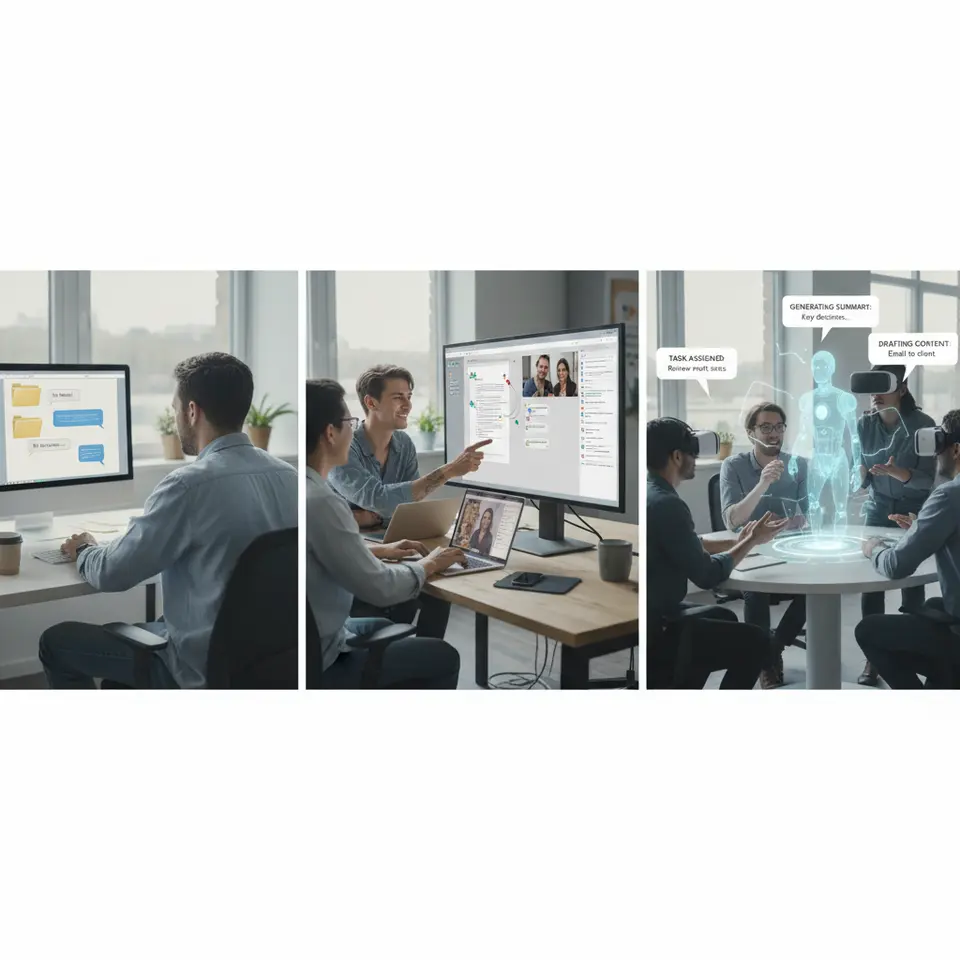
Generative AI comprises techniques like transformers, Generative Adversarial Networks (GANs), and Variational Autoencoders (VAEs). These models learn complex patterns from large datasets and generate novel outputs, including text, images, code, and even synthetic datasets. At the core of this technology is the ability to fine-tune base models on domain-specific data, ensuring outputs adhere to brand style, technical accuracy, and compliance requirements.
When evaluating generative AI platforms for boosting team collaboration with generative AI, consider four critical factors:
- Inference Latency: How quickly does the model respond? Low latency is vital for real-time applications like live brainstorming sessions.
- Output Quality: Measure coherence, relevance, and factual accuracy. Tools backed by peer-reviewed research—such as projects hosted by Stanford University’s AI Lab (https://ai.stanford.edu)—often deliver superior results.
- Customization APIs: Assess the ability to integrate custom prompts, domain-specific training, and API extensibility for seamless platform embedding.
- Data Privacy and Security: Ensure robust encryption, role-based access control, and compliance with regulations to protect sensitive information.
Implementing generative AI also requires building prompt engineering capabilities, establishing version control for generated assets, and designing human-in-the-loop review processes. These steps safeguard against model hallucinations and maintain quality standards. By mastering these fundamentals, teams can confidently harness AI as a creative partner rather than viewing it as a black box.
Major Advantages of Generative AI for Teams
Integrating generative AI into collaboration workflows delivers a range of benefits that collectively drive productivity and innovation:
- Accelerated Content Generation: Drafting reports, proposals, and presentations can be expedited through AI-powered text synthesis, reducing manual drafting time by up to 70%.
- Enhanced Ideation Sessions: AI-driven brainstorming tools surface varied concepts based on minimal input, widening creative possibilities and overcoming mental blocks.
- Automated Administrative Tasks: Routine activities such as meeting note transcription, task assignment, and calendar coordination become largely hands-off, freeing team members to focus on value-added work.
- Actionable Data Insights: AI models can quickly analyze large datasets, produce clear visualizations, and generate executive summaries, enabling informed decision making.
These benefits translate into tangible ROI. A recent whitepaper from the European Commission on AI adoption notes that organizations leveraging generative AI report an average 25% increase in process efficiency. In collaborative settings, reduced cognitive load and faster iteration cycles also lead to higher employee satisfaction and lower burnout rates. By prioritizing AI augmentation rather than pure automation, teams maintain creative control while maximizing throughput.
Selecting and Implementing Top AI Tools for Collaboration

Choosing the right generative AI tools depends on your team’s specific needs, technical environment, and budget constraints. Here are six leading solutions commonly used in today’s digital workplace:
- OpenAI ChatGPT: A versatile conversational AI that excels in drafting text, answering queries, and facilitating brainstorming through API or chat interfaces.
- GitHub Copilot: An AI pair-programmer integrated into IDEs, offering contextual code suggestions, documentation, and test stubs.
- Jasper AI: Specialized in long-form content with brand voice controls, ideal for marketing teams seeking consistent messaging.
- DALL·E 3 & Midjourney: Advanced image generation platforms producing marketing visuals, UX mockups, and concept art based on brief prompts.
- Notion AI: Enhances knowledge management systems with automated summaries, task generation, and project roadmap suggestions.
- Synthesia: Converts text scripts into AI-generated video presentations and training modules, reducing video production overhead.
When selecting tools, run pilots in low-risk environments—such as internal documentation or customer support templates—to evaluate performance and gather user feedback. Establish clear success metrics like time saved, error reduction, and user satisfaction to guide scale-up decisions. Partner with vendors who offer robust security certifications and customizable models to align with organizational policies.
Strategies for Seamless Integration and Adoption
Rolling out generative AI successfully requires a structured approach that addresses technical, organizational, and cultural factors:
- Pilot in Controlled Use Cases: Start with processes that have limited regulatory risk—such as marketing collateral or internal newsletters.
- Identify AI Champions: Empower early adopters to lead by example, share best practices, and gather continuous feedback.
- Develop Governance Frameworks: Define data access policies, quality checkpoints, and escalation procedures for model outputs.
- Train Teams on Prompt Engineering: Conduct hands-on workshops covering ethical AI use, bias mitigation, and effective prompt design.
- Measure, Iterate, and Scale: Monitor KPIs—time savings, adoption rates, and quality metrics—and refine workflows before expanding to additional teams.
Embedding these strategies ensures that generative AI becomes an integral, trusted ally rather than a standalone novelty. Maintaining human oversight throughout the process safeguards against errors and reinforces user confidence.
Frequently Asked Questions
What is generative AI and how can it improve team collaboration?
Generative AI refers to advanced machine learning models capable of creating new content—such as text, images, and code—based on patterns learned from large datasets. By integrating these models into collaboration platforms, teams can automate routine tasks, generate initial drafts, and receive real-time insights, ultimately accelerating workflows and fostering creativity.
How do I select the right AI tool for my team?
Begin by identifying your team’s specific use cases, performance requirements, and budget constraints. Evaluate tools based on inference latency, output quality, customization options, and security certifications. Pilot promising solutions in low-risk scenarios and measure time savings, error reduction, and user satisfaction before scaling organization-wide.
What security and privacy considerations should teams keep in mind?
Ensure any generative AI platform you choose supports robust encryption, role-based access controls, and compliance with industry regulations. Establish data governance policies that define who can access sensitive information, set up review processes for AI-generated outputs, and regularly audit model behavior to prevent unauthorized data exposure.
How can organizations train team members on effective prompt engineering?
Offer hands-on workshops and interactive tutorials covering prompt design best practices, ethical AI use, and bias mitigation strategies. Encourage cross-functional collaboration—pairing technical experts with domain specialists—to develop a shared understanding of how to craft clear, context-rich prompts that yield accurate and relevant outputs.
Which metrics should be tracked to measure the impact of generative AI on collaboration?
Key performance indicators include time saved on routine tasks, adoption rates across teams, output quality scores, and user satisfaction ratings. Additionally, monitor error rates and the frequency of human-in-the-loop interventions to ensure that AI augmentation is improving efficiency without compromising accuracy or compliance.
Conclusion
Boosting team collaboration with generative AI represents a pivotal opportunity to elevate productivity, creativity, and employee engagement in today’s fast-paced environment. By understanding core AI technologies, selecting the right tools, and following structured integration strategies, organizations can unlock significant efficiency gains and foster innovation. Critical success factors include piloting low-risk use cases, empowering AI champions, establishing governance policies, and continuously measuring impact against clear KPIs.
As you embark on this journey in 2026, remember that technology alone is not enough. Aligning people, processes, and governance will ensure that generative AI enhances human capabilities and drives sustainable success. Begin with small, focused experiments, learn quickly from real-world feedback, and scale judiciously to transform your team into an AI-empowered engine of collaboration and innovation.