
Creative teams often struggle with bottlenecks and misaligned feedback. Integrating generative tools into your workflow instantly eliminates these barriers, fostering seamless communication and rapid iteration.
When you leverage generative tools effectively, you bridge the gap between ideation and execution. This guide explores actionable deployment strategies, core features, and expert tips. You will learn how generative tools reduce manual tasks, align cross-functional teams, and dramatically accelerate your entire creative production cycle.
The Shift Toward AI-Powered Teamwork
Generative tools have fundamentally transformed how creative professionals work together. Previously, teams relied on endless email chains and disconnected software to share concepts. This fragmented approach caused delays and constant misunderstandings. Today, generative tools provide a unified ecosystem where copywriters, visual artists, and project managers collaborate simultaneously.
These generative tools do more than just produce assets. They actively interpret prompts, analyze historical brand data, and predict the creative direction your team wants to take. By adopting generative tools, you give your team a shared brain. Everyone operates from the same baseline, which reduces friction and ensures your final output aligns perfectly with your original vision.
The integration of generative tools also democratizes the creative process. Non-designers can visualize their ideas by typing simple text prompts. This capability allows account managers and strategists to communicate visually, eliminating the ambiguity that often plagues early-stage planning. Consequently, generative tools act as a universal translator across different departments.
To fully grasp this transformation, consider how teams manage Creative Asset Operations. Rather than waiting days for a mock-up, stakeholders use generative tools to visualize concepts in seconds. This instant gratification keeps the momentum high and prevents creative fatigue. Generative tools keep everyone engaged, focused, and moving toward a unified goal.
Breaking Down Silos With Generative Tools
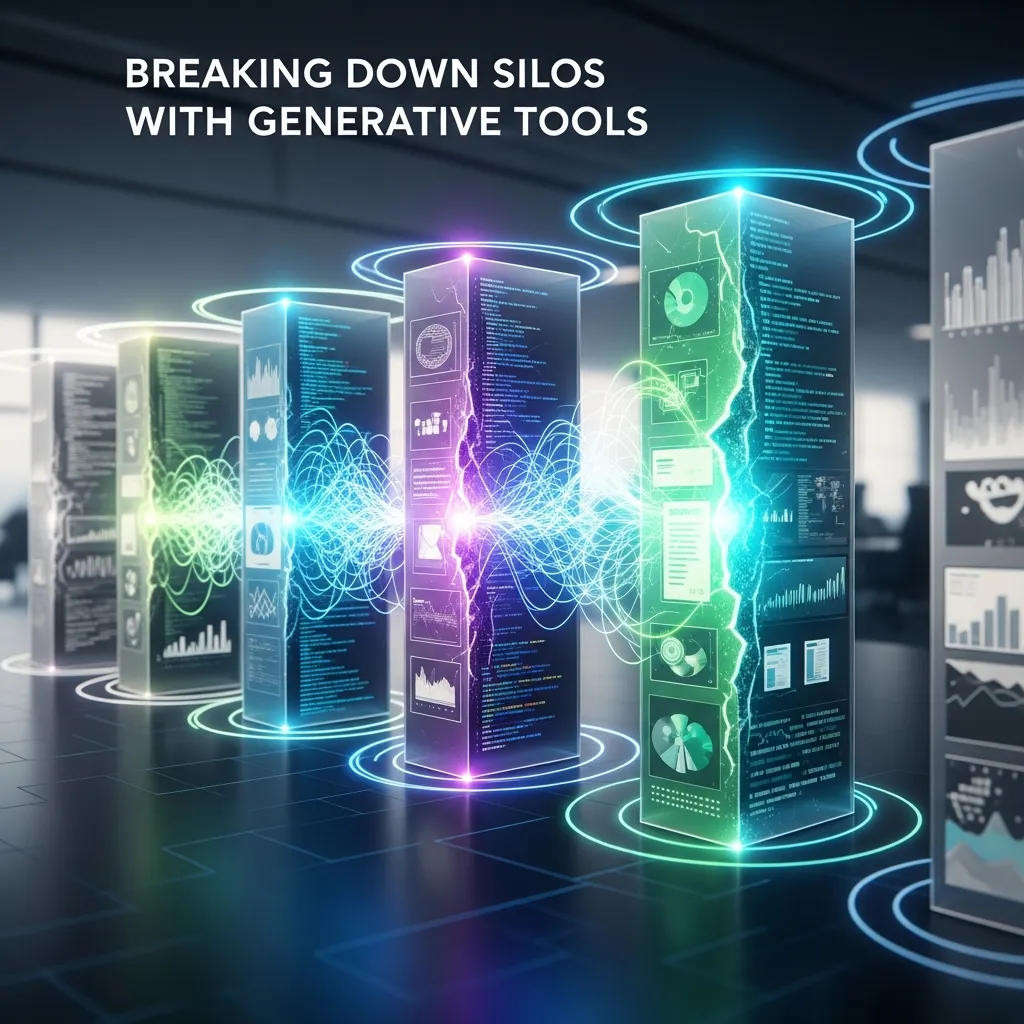
Silos destroy productivity. When designers, writers, and developers operate in isolation, projects stall. Generative tools break down these invisible walls by centralizing the creative process. When a writer needs a specific graphic to accompany their text, they no longer have to submit a ticket and wait. Instead, they use generative tools to create a placeholder, allowing the design team to understand the exact context and layout required.
This real-time synchronization is the hallmark of modern generative tools. They allow multiple users to interact with a dynamic canvas. If a creative director wants to pivot the visual style, they input new parameters into the generative tools, and the entire team instantly sees the updated direction. This immediate feedback loop is critical for maintaining project velocity.
Furthermore, generative tools foster a culture of shared ownership. Because everyone can contribute to the ideation phase, team members feel more invested in the final product. Generative tools remove the hierarchy that traditionally dictates creative workflows. Junior designers can use generative tools to rapidly prototype ideas that might have otherwise been ignored, proving that the best ideas can come from anywhere.
Many organizations incorporate generative tools alongside Agile Project Methodologies to maintain rapid sprint cycles. By utilizing generative tools during daily stand-ups, teams can resolve design blocks immediately. This proactive approach ensures that minor issues never escalate into project-derailing problems.
Core Features of Elite Generative Tools

Not all software offers the same collaborative benefits. When evaluating generative tools for your team, you must look for specific features that enhance teamwork rather than complicate it.
Multiplayer Canvas Environments
The best generative tools feature multiplayer environments. Similar to working in a shared document, these platforms allow dozens of users to view and edit the workspace simultaneously. Generative tools with this capability ensure that no one works on an outdated version of a file. Every adjustment happens in real-time, providing total transparency.
Context-Aware Prompting
Advanced generative tools understand the context of your specific brand. You can train these generative tools using your existing style guides, color palettes, and tone of voice documents. Once trained, the generative tools ensure that every piece of content created by any team member adheres strictly to your brand guidelines. This feature dramatically reduces the time spent on manual quality assurance.
Integrated Version History
Creative collaboration requires experimentation. Sometimes, an idea fails, and the team needs to revert to an earlier concept. High-quality generative tools offer robust version history and branching capabilities. You can explore a wild concept using generative tools and, if it does not work out, restore the original file with a single click. This safety net encourages creative risk-taking.
Seamless Third-Party Integrations
Your team already uses project management software, communication apps, and file storage systems. Generative tools must integrate smoothly into this existing tech stack. Elite generative tools push notifications directly to your communication channels when a new asset is ready for review. This interconnectedness ensures that generative tools enhance your workflow rather than acting as a disjointed extra step.
Comparison: Leading Generative Tools for Teams
Understanding the landscape of generative tools helps you make an informed decision for your organization.
|
Feature |
Legacy Design Software |
Modern Generative Tools |
|---|---|---|
|
Ideation Speed |
Hours to days |
Seconds to minutes |
|
Collaboration |
Asynchronous, file-sharing based |
Synchronous, real-time multiplayer |
|
Asset Variation |
Manual recreation required |
Automated bulk generation |
|
Brand Consistency |
Relies on manual human review |
AI-enforced style guidelines |
|
Accessibility |
High learning curve, specialists only |
Low learning curve, text-to-image capable |
As this table illustrates, modern generative tools offer significant advantages over traditional software. The shift from asynchronous to synchronous collaboration is particularly vital for distributed or remote teams.
Implementing Generative Tools in Your Workflow
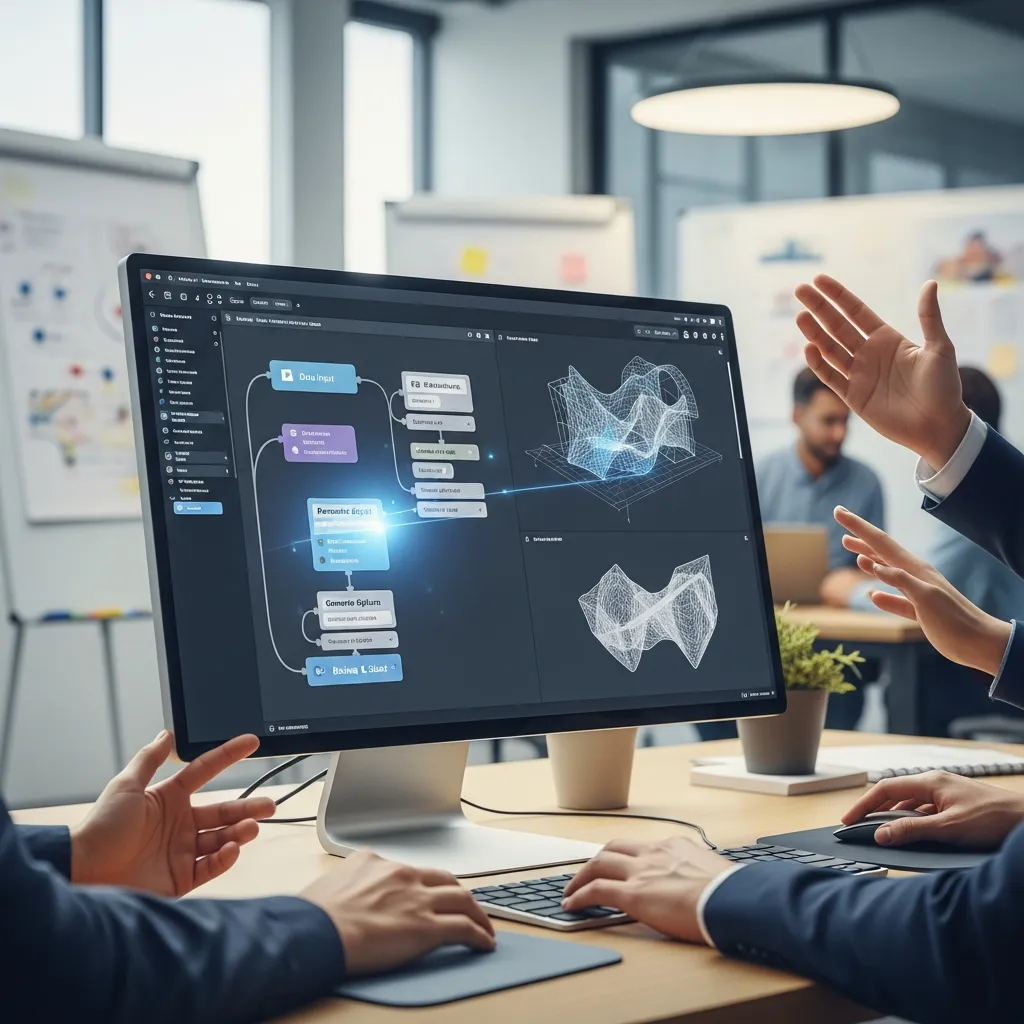
Bringing generative tools into your daily operations requires a strategic approach. Simply purchasing a license and expecting your team to adapt will lead to frustration.
Audit Your Current Bottlenecks
Before introducing generative tools, identify exactly where your process slows down. Do projects stall during the initial brainstorming phase? Is the feedback loop between clients and designers too slow? By pinpointing these bottlenecks, you can deploy generative tools specifically to solve those exact problems.
Start With Pilot Projects
Do not force your entire company to switch to generative tools overnight. Select a small, agile team to run a pilot project using the new generative tools. Allow this team to document their workflows, discover best practices, and identify any integration issues. This controlled testing phase ensures that when you roll out the generative tools company-wide, you have a proven roadmap for success.
Establish Prompting Guidelines
Generative tools are only as good as the prompts they receive. Create a centralized library of successful prompts and Prompt Engineering Strategies for your team. Teach them how to communicate effectively with generative tools. When everyone understands how to frame their requests, the generative tools will produce highly accurate, usable assets much faster.
Host Regular Training Sessions
Software updates frequently, and generative tools evolve rapidly. Host monthly training sessions to show your team the latest features and capabilities of your chosen generative tools. Encourage team members to share their own discoveries and techniques. This collaborative learning environment maximizes your return on investment in generative tools.
Overcoming Common Hurdles With Generative Tools

While generative tools offer massive benefits, teams often face specific challenges during adoption. Recognizing these hurdles early allows you to navigate them smoothly.
A major hurdle is the fear of replacement. Many creatives worry that generative tools will eliminate their jobs. Leaders must frame generative tools as assistants, not replacements. Emphasize that generative tools handle the mundane, repetitive tasks, freeing human designers to focus on high-level strategy and emotional resonance. Generative tools cannot replicate human empathy or complex problem-solving.
Another challenge is output homogenization. If teams rely too heavily on the default settings of generative tools, their work may start to look generic. Encourage your team to use generative tools as a starting point, not the finish line. Designers must layer their unique perspective, adding the final polish that generative tools cannot achieve.
Data security also presents a concern. When using generative tools, you upload proprietary brand information. Always ensure you select enterprise-grade generative tools that guarantee your data will not be used to train public models. Securing your intellectual property is paramount when integrating generative tools into corporate workflows.
Expert Insights on Generative Tools
Industry leaders utilize generative tools in ways that push the boundaries of traditional design. To maximize your team’s potential, apply these expert tactics to your generative tools strategy.
First, use generative tools for rapid client alignment. During kickoff meetings, type the client’s ideas directly into your generative tools. Within seconds, you can present visual concepts, allowing the client to confirm or reject the direction immediately. This application of generative tools eliminates weeks of misaligned drafting.
Second, leverage generative tools for infinite localization. If you are launching a global campaign, you need assets tailored to different regions and cultures. Generative tools can automatically adjust backgrounds, text overlays, and cultural nuances across hundreds of assets simultaneously. This scale of personalization is impossible without generative tools.
Third, combine generative tools with Automated Analytics Dashboards. Track which AI-generated assets perform best with your audience. Feed this performance data back into your generative tools to refine future outputs. This closed-loop system ensures your generative tools become smarter and more effective with every campaign.
Designing the Future With Generative Tools
The trajectory of generative tools points toward even deeper integration and autonomy. We are moving away from treating generative tools as standalone applications and toward embedding them into every digital surface we touch.
In the near future, generative tools will proactively suggest design improvements based on user engagement metrics. If a landing page has a high bounce rate, generative tools will automatically generate layout alternatives and suggest A/B tests. This proactive nature of generative tools will fundamentally change the role of the designer from a creator to a curator.
Furthermore, 3D and spatial computing will heavily rely on generative tools. As teams design virtual environments, generative tools will instantly populate these spaces with highly detailed, optimized assets. The ability of generative tools to understand physical space and lighting will allow teams to build immersive experiences faster than ever before.
As generative tools continue to advance, the teams that embrace them will hold a massive competitive advantage. They will iterate faster, collaborate smoother, and produce higher-quality work.
Generative tools are not just a passing trend; they are the new foundation of creative collaboration. By fully integrating generative tools into your team’s DNA, you unlock unprecedented levels of innovation and efficiency. You empower your people to do their best work, free from the constraints of legacy workflows.
Embracing generative tools represents a crucial step forward for any creative team. By centralizing communication, accelerating ideation, and breaking down traditional silos, generative tools transform how you execute projects. Start integrating generative tools into your workflow today, foster a culture of continuous learning, and watch your team’s productivity and creative output soar to unprecedented heights.
FAQs
What exactly are generative tools in design?
Generative tools are software applications powered by artificial intelligence that help teams create, modify, and optimize text, images, code, and layouts. They accelerate the creative process by turning simple instructions into fully realized design assets.
How do generative tools improve team collaboration?
Generative tools improve collaboration by providing a shared, real-time workspace where cross-functional teams can visualize concepts instantly. This eliminates long feedback loops and ensures everyone is aligned on the visual direction from day one.
Will generative tools replace my design team?
No. Generative tools handle repetitive, mundane tasks and provide starting points for ideation. They empower your human designers to focus on high-level strategy, complex problem solving, and emotional storytelling.
Are generative tools difficult to learn?
Most modern generative tools are designed with intuitive interfaces. You can generate complex assets using simple text prompts, making these tools highly accessible even for team members who lack traditional design skills.
How do generative tools maintain brand consistency?
Enterprise-grade generative tools allow you to train the AI on your specific brand guidelines, color palettes, and typography. This ensures that every asset produced by the generative tools aligns strictly with your visual identity.
Can generative tools integrate with my current software?
Yes, leading generative tools offer robust APIs and native integrations with popular project management, communication, and file storage platforms. This allows you to fit generative tools seamlessly into your existing tech stack.
What is the biggest mistake teams make with generative tools?
The biggest mistake is treating generative tools as the final step. Teams should use generative tools to generate concepts and rough drafts, but human designers must always apply the final polish to ensure quality and originality.
Are there security risks when using generative tools?
Public generative tools may use your inputs for training data. To protect your intellectual property, businesses must invest in secure, enterprise-level generative tools that guarantee complete data privacy and confidentiality.
How do generative tools help with client presentations?
You can use generative tools during live client meetings to instantly visualize their feedback. This immediate generation of concepts secures rapid alignment and prevents weeks of frustrating revisions.
How quickly can a team see ROI from generative tools?
Teams often see immediate returns in the form of time saved during the ideation and drafting phases. Long-term ROI becomes evident as generative tools allow your team to scale asset production without increasing headcount.